what energy method does not use a generator to produce electricity?
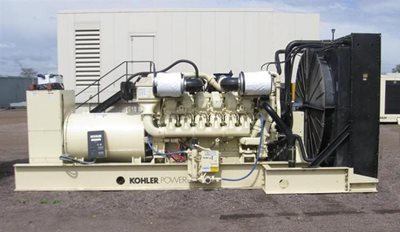 Generators are useful appliances that supply electrical ability during a power outage and prevent discontinuity of daily activities or disruption of business operations. Generators are available in different electrical and physical configurations for use in unlike applications. In the following sections, we will wait at how a generator functions, the main components of a generator, and how a generator operates as a secondary source of electrical power in residential and industrial applications.
How does a generator piece of work?
An electrical generator is a device that converts mechanical energy obtained from an external source into electrical free energy as the output.
It is important to understand that a generator does not really 'create' electric free energy. Instead, it uses the mechanical energy supplied to information technology to strength the motility of electrical charges nowadays in the wire of its windings through an external electrical circuit. This flow of electric charges constitutes the output electric electric current supplied by the generator. This mechanism can be understood by considering the generator to be analogous to a h2o pump, which causes the flow of water simply does not actually 'create' the water flowing through information technology.
The modern-day generator works on the principle of electromagnetic induction discovered by Michael Faraday in 1831-32. Faraday discovered that the above flow of electric charges could exist induced by moving an electric conductor, such every bit a wire that contains electrical charges, in a magnetic field. This motility creates a voltage departure between the two ends of the wire or electrical conductor, which in plow causes the electric charges to period, thus generating electric current.
Main components of a generator
The main components of an electric generator tin be broadly classified as follows:
- Engine
- Alternator
- Fuel Organisation
- Voltage Regulator
- Cooling and Exhaust Systems
- Lubrication Organisation
- Battery Charger
- Command Panel
- Main Assembly / Frame
Engine 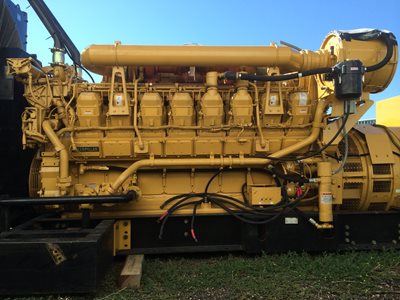
The engine is the source of the input mechanical energy to the generator. The size of the engine is direct proportional to the maximum power output the generator tin can supply. There are several factors that you need to proceed in heed while assessing the engine of your generator. The manufacturer of the engine should be consulted to obtain total engine operation specifications and maintenance schedules.
(a) Type of Fuel Used – Generator engines operate on a variety of fuels such as diesel, gasoline, propane (in liquefied or gaseous form), or natural gas. Smaller engines commonly operate on gasoline while larger engines run on diesel, liquid propane, propane gas, or natural gas. Certain engines can also operate on a dual feed of both diesel fuel and gas in a bi-fuel performance mode.
(b) Overhead Valve (OHV) Engines versus non-OHV Engines – OHV engines differ from other engines in that the intake and exhaust valves of the engine are located in the caput of the engine'southward cylinder as opposed to being mounted on the engine block. OHV engines have several advantages over other engines such as:
• Meaty pattern
• Simpler operation mechanism
• Immovability
• User-friendly in operations
• Low racket during operations
• Low emission levels
However, OHV-engines are also more expensive than other engines.
(c) Cast Fe Sleeve (CIS) in Engine Cylinder – The CIS is a lining in the cylinder of the engine. It reduces wear and tear, and ensures durability of the engine. Most OHV-engines are equipped with CIS simply it is essential to cheque for this feature in the engine of a generator. The CIS is not an expensive feature but it plays an important function in engine immovability peculiarly if yous need to utilize your generator often or for long durations.
Alternator
The alternator, also known as the 'genhead', is the part of the generator that produces the electrical output from the mechanical input supplied by the engine. Information technology contains an associates of stationary and moving parts encased in a housing. The components piece of work together to cause relative movement between the magnetic and electrical fields, which in turn generates electricity.
(a) Stator – This is the stationary component. It contains a set of electrical conductors wound in coils over an iron core.
(b) Rotor / Armature – This is the moving component that produces a rotating magnetic field in any one of the following iii ways:
(i) Past induction – These are known as brushless alternators and are usually used in large generators.
(ii) Past permanent magnets – This is common in small alternator units.
(iii) By using an exciter – An exciter is a small source of directly current (DC) that energizes the rotor through an assembly of conducting slip rings and brushes.
The rotor generates a moving magnetic field around the stator, which induces a voltage difference between the windings of the stator. This produces the alternate current (AC) output of the generator.
The following are the factors that yous demand to keep in mind while assessing the alternator of a generator:
(a) Metal versus Plastic Housing – An all-metal design ensures durability of the alternator. Plastic housings get deformed with time and cause the moving parts of the alternator to be exposed. This increases vesture and tear and more importantly, is chancy to the user.
(b) Ball Bearings versus Needle Bearings – Ball bearings are preferred and last longer.
(c) Brushless Pattern – An alternator that does not employ brushes requires less maintenance and as well produces cleaner ability.
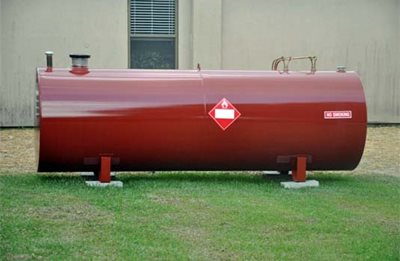 Fuel System
The fuel tank ordinarily has sufficient chapters to proceed the generator operational for 6 to 8 hours on an average. In the example of small generator units, the fuel tank is a part of the generator's skid base or is mounted on top of the generator frame. For commercial applications, information technology may be necessary to erect and install an external fuel tank. All such installations are subject field to the approval of the City Planning Division. Click the following link for further details regarding fuel tanks for generators.
Common features of the fuel system include the following:
(a) Pipe connexion from fuel tank to engine – The supply line directs fuel from the tank to the engine and the return line directs fuel from the engine to the tank.
(b) Ventilation pipe for fuel tank – The fuel tank has a ventilation piping to prevent the build-upwards of pressure or vacuum during refilling and drainage of the tank. When you refill the fuel tank, ensure metal-to-metal contact between the filler nozzle and the fuel tank to avoid sparks.
(c) Overflow connection from fuel tank to the bleed piping – This is required and so that whatever overflow during refilling of the tank does not crusade spillage of the liquid on the generator set.
(d) Fuel pump – This transfers fuel from the main storage tank to the solar day tank. The fuel pump is typically electrically operated.
(e) Fuel H2o Separator / Fuel Filter – This separates water and foreign matter from the liquid fuel to protect other components of the generator from corrosion and contamination.
(f) Fuel Injector – This atomizes the liquid fuel and sprays the required corporeality of fuel into the combustion chamber of the engine.
Voltage Regulator
Every bit the name implies, this component regulates the output voltage of the generator. The machinery is described below against each component that plays a part in the cyclical process of voltage regulation.
(i) Voltage Regulator: Conversion of Air conditioning Voltage to DC Current – The voltage regulator takes up a small-scale portion of the generator's output of Air-conditioning voltage and converts it into DC electric current. The voltage regulator then feeds this DC current to a set of secondary windings in the stator, known as exciter windings.
(2) Exciter Windings: Conversion of DC Electric current to AC Current – The exciter windings now function similar to the primary stator windings and generate a pocket-size Air conditioning current. The exciter windings are connected to units known as rotating rectifiers.
(three) Rotating Rectifiers: Conversion of Ac Current to DC Current – These rectify the AC current generated by the exciter windings and catechumen it to DC current. This DC current is fed to the rotor / armature to create an electromagnetic field in add-on to the rotating magnetic field of the rotor / armature.
(iv) Rotor / Armature: Conversion of DC Current to AC Voltage – The rotor / armature at present induces a larger AC voltage across the windings of the stator, which the generator now produces as a larger output Ac voltage.
This cycle continues till the generator begins to produce output voltage equivalent to its full operating capacity. Equally the output of the generator increases, the voltage regulator produces less DC current. Once the generator reaches full operating chapters, the voltage regulator attains a country of equilibrium and produces only enough DC electric current to maintain the generator's output at full operating level.
When you add a load to a generator, its output voltage dips a petty. This prompts the voltage regulator into action and the to a higher place cycle begins. The cycle continues till the generator output ramps up to its original full operating capacity.
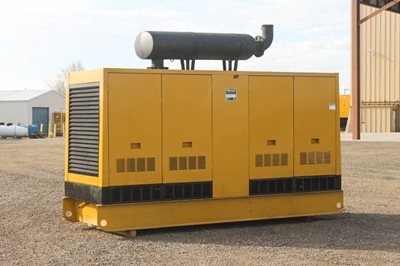 Cooling & Exhaust System
(a) Cooling System
Continuous usage of the generator causes its various components to get heated up. It is essential to accept a cooling and ventilation organization to withdraw estrus produced in the process.
Raw/fresh water is sometimes used as a coolant for generators, but these are by and large express to specific situations similar small generators in city applications or very large units over 2250 kW and in a higher place. Hydrogen is sometimes used as a coolant for the stator windings of large generator units since it is more than efficient at absorbing heat than other coolants. Hydrogen removes rut from the generator and transfers it through a estrus exchanger into a secondary cooling excursion that contains de-mineralized h2o every bit a coolant. This is why very big generators and small ability plants oftentimes accept large cooling towers next to them. For all other common applications, both residential and industrial, a standard radiator and fan is mounted on the generator and works as the primary cooling system.
It is essential to check the coolant levels of the generator on a daily basis. The cooling organisation and raw water pump should exist flushed after every 600 hours and the heat exchanger should exist cleaned later every 2,400 hours of generator operation. The generator should be placed in an open and ventilated area that has acceptable supply of fresh air. The National Electric Lawmaking (NEC) mandates that a minimum space of 3 feet should be allowed on all sides of the generator to ensure free catamenia of cooling air.
(b) Exhaust System
Exhaust fumes emitted by a generator are only like frazzle from any other diesel or gasonline engine and contain highly toxic chemicals that need to be properly managed. Hence, information technology is essential to install an adequate exhaust organization to dispose of the exhaust gases. This point can non exist emphasized plenty as carbon monoxide poisoning remains one of the most common causes for death in post hurricane afflicted areas because people tend to not even think about information technology until it's too tardily.
Frazzle pipes are normally made of cast iron, wrought iron, or steel. These need to be freestanding and should not be supported by the engine of the generator. Exhaust pipes are usually attached to the engine using flexible connectors to minimize vibrations and prevent harm to the generator'southward exhaust system. The exhaust pipe terminates outdoors and leads abroad from doors, windows and other openings to the house or building. Y'all must ensure that the exhaust organisation of your generator is non connected to that of whatsoever other equipment. You should besides consult the local city ordinances to make up one's mind whether your generator operation will need to obtain an approval from the local authorities to ensure y'all are conforming to local laws a protect against fines and other penalties.
Lubricating System
Since the generator comprises moving parts in its engine, it requires lubrication to ensure durability and smooth operations for a long catamenia of time. The generator'southward engine is lubricated past oil stored in a pump. You should bank check the level of lubricating oil every 8 hours of generator operation. You should too check for any leakages of lubricant and change the lubricating oil every 500 hours of generator performance.
Battery Charger
The st e art office of a generator is battery-operated. The bombardment charger keeps the generator battery charged past supplying it with a precise 'float' voltage. If the float voltage is very low, the battery volition remain undercharged. If the float voltage is very high, it will shorten the life of the battery. Battery chargers are usually fabricated of stainless steel to preclude corrosion. They are also fully automatic and do non require any adjustments to be made or whatever settings to be changed. The DC output voltage of the battery charger is set at ii.33 Volts per cell, which is the precise float voltage for lead acid batteries. The battery charger has an isolated DC voltage output that does interfere with the normal functioning of the generator.
.jpg.aspx?width=400&height=225 "Control-Panel") Control Panel
Control Panel
This is the user interface of the generator and contains provisions for electrical outlets and controls. The following article provides further details regarding the generator control panel. Different manufacturers have varied features to offer in the command panels of their units. Some of these are mentioned below.
(a) Electric start and shut-downward – Car start control panels automatically get-go your generator during a power outage, monitor the generator while in performance, and automatically shut downwardly the unit of measurement when no longer required.
(b) Engine gauges – Dissimilar gauges indicate important parameters such as oil pressure, temperature of coolant, battery voltage, engine rotation speed, and elapsing of operation. Abiding measurement and monitoring of these parameters enables built-in close downward of the generator when whatever of these cross their corresponding threshold levels.
(c) Generator gauges – The command panel also has meters for the measurement of output current and voltage, and operating frequency.
(d) Other controls – Phase selector switch, frequency switch, and engine control switch (manual mode, machine style) amid others.
Primary Assembly/Frame
All generators, portable or stationary, have customized housings that provide a structural base back up. The frame besides allows for the generated to be earthed for prophylactic.
Source: https://www.generatorsource.com/How_Generators_Work.aspx
0 Response to "what energy method does not use a generator to produce electricity?"
Post a Comment